



What Meditation Really Is
A gentle introduction to meditation without the pressure to empty your mind or "do it right."
Read the note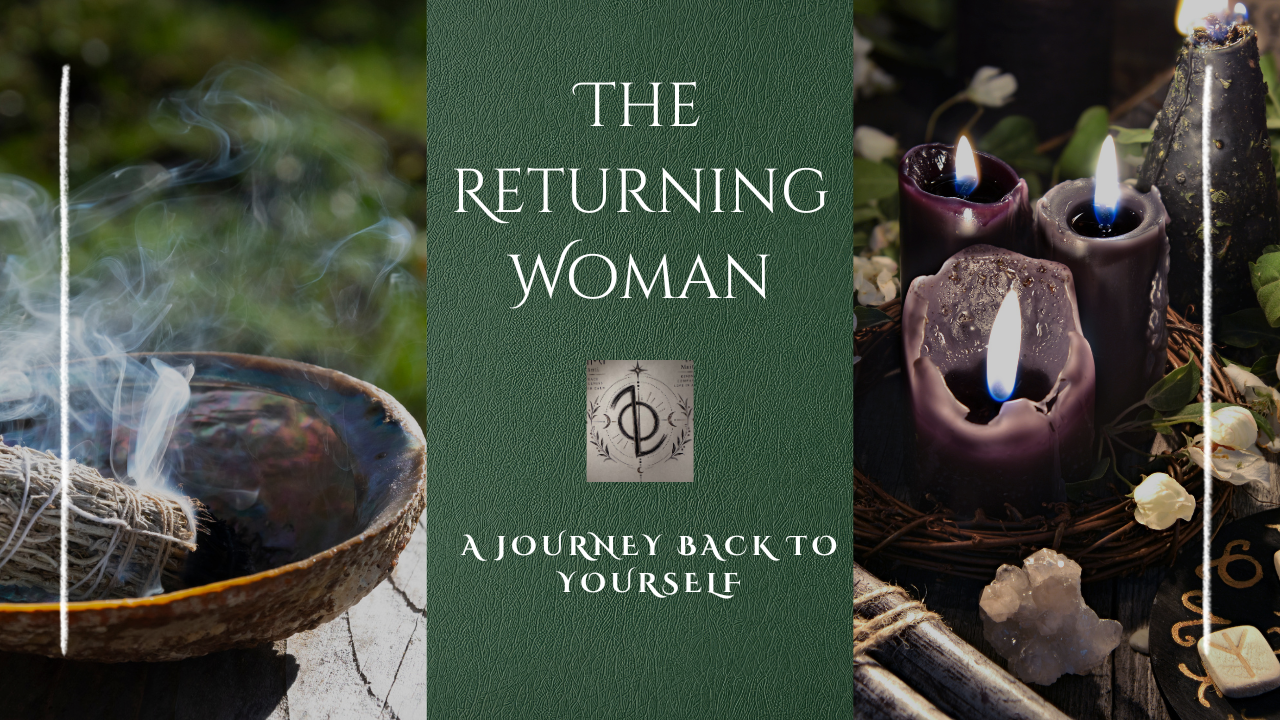
Classes & Gatherings
A Journey Back to Yourself
Life asks a great deal of us. Between the roles we fill, the people we care for, the changes we move through, and the expectations we carry, it can be easy to lose touch with ourselves.
The Returning Women is a space for women to slow down, reconnect, share experiences, explore meaningful questions, and return to the parts of themselves that may have been waiting for their attention.
Through conversation, reflection, and shared practices, we create room for curiosity, connection, and a deeper relationship with ourselves. There is no expectation to have everything figured out. Simply come as you are.
In-Person Gathering
Time and location details coming soon — check back or subscribe to the newsletter.
Location to be announced.
Space is limited. Register below to reserve your place.
Friday Night Online Gatherings
The Friday night online gatherings are another way to participate in The Returning Women. Each week, we come together to connect, reflect, learn, and practice — from wherever we happen to be. These gatherings offer the same warmth and intention as the in-person experience, held in an online space that is accessible to anyone.
Meeting time and connection details coming soon.
Registration information will be shared here when available.
Meditation Practices & Resources

Meditation
Meditation doesn't have to mean emptying your mind or becoming someone who never gets distracted. The mind wanders. That's what minds do.
Meditation is the practice of noticing that we've wandered and gently returning.
Here at Mindful Trace, meditation is less about achieving a particular state and more about developing a different relationship with our attention. We learn to notice where the mind goes, to become less reactive to every thought that appears, and to return again and again to what is actually here.
Some of these practices are simple Mindful Trace practices developed around presence, awareness, and returning to the body. Others are influenced by traditions and teachers who have helped shape the way I understand meditation, particularly Eknath Easwaran.
The invitation isn't to become a perfect meditator.
It's simply to begin returning.
Meditation
A gentle introduction to meditation without the pressure to empty your mind or "do it right."
Read the noteWhy the moment you notice you've wandered may actually be the most important moment of meditation.
Read the noteMaking room for stillness, restlessness, boredom, and everything else that appears when we stop distracting ourselves.
Read the noteWhat to do when sitting still seems to make your thoughts louder rather than quieter.
Read the noteMeditation
A short practice for stepping out of the noise of the mind and reconnecting with the physical experience of being here.
Read the noteA simple way to pause between one thing and the next and actually arrive where you are.
Read the noteA quiet evening practice for reconnecting with the body and allowing the day to settle.
Read the noteA practice of noticing emotions without immediately becoming caught inside them.
Read the noteLearning to acknowledge an emotion without allowing it to define the whole of your experience.
Read the noteMeditation
Why attention is not simply something we have, but something we can practice.
Read the noteExploring how the things we repeatedly focus on begin to shape the way we experience our lives.
Read the noteNot every thought deserves our attention, and not every thought needs to become a story.
Read the noteLearning what it feels like to give one thing our full attention instead of constantly dividing ourselves.
Read the noteA practice for noticing when our thoughts have moved into the future and gently returning to the present.
Read the noteLearning to stop treating distraction as failure.
Read the noteMeditation
Exploring how the qualities developed in meditation can continue into the rest of the day.
Read the noteCreating a little more space between impulse and action.
Read the noteDiscovering what changes when walking becomes an opportunity to actually be where your feet are.
Read the noteMoving away from automatic eating and toward actually experiencing a meal.
Read the noteBringing meditation into conversation by learning to give another person our full attention.
Read the noteCreating enough space to choose a response instead of automatically following an impulse.
Read the noteInspired by Eknath Easwaran
My approach to meditation has also been influenced by the work of Eknath Easwaran, the originator of passage meditation and the author of numerous books on meditation and spiritual living. Easwaran taught passage meditation for four decades and developed a practical approach centered on training the mind and carrying that training into ordinary life.
His approach is especially meaningful to me because meditation isn't treated as something separate from the rest of life. Attention matters when we're sitting quietly, but it also matters when we're speaking with someone, working, eating, waiting, reacting, or moving through an ordinary day.
Easwaran's eight-point program includes meditation on a passage, repetition of a mantram, slowing down, one-pointed attention, training the senses, putting others first, spiritual fellowship, and spiritual reading.
Mindful Trace is not intended to reproduce Easwaran's teachings. Instead, this section acknowledges his influence and explores some of the same larger questions through my own voice and experience.
What happens when we learn to pay attention?
What happens when we stop treating every thought as an instruction?
What happens when the practice of meditation begins to change the way we move through an ordinary Tuesday?
Those are the questions I want to explore here.
Conquest of Mind
Eknath Easwaran
Before The Mindful Trace, before I had words for much of what I was exploring, there was this book. Conquest of Mind was my introduction to Eknath Easwaran and to the idea that the mind isn't something we simply have to live with—it is something we can learn to work with.
It became one of those books I returned to as my own understanding of meditation, attention, and the inner life began to grow. In many ways, this is where my journey with Easwaran began.
The Easwaran Reading Shelf
Easwaran's foundational guide to his method of passage meditation, including guidance on choosing a passage, working with distractions, and establishing a regular practice. The official Blue Mountain Center describes passage meditation as silently going through the words of a memorized inspirational passage, with the practice traditionally done for 30 minutes each morning.
A practical introduction to Easwaran's approach to the mantram—a short spiritual formula or prayer word repeated silently to steady attention throughout the day.
A collection of passages from the world's wisdom traditions selected by Easwaran for meditation and reflection.
A broader collection of wisdom passages from spiritual traditions around the world, useful for reading, reflection, and exploring material for meditation.
Easwaran's extended exploration of the Bhagavad Gita and its relevance to everyday life.
Easwaran's translation and commentary on the Upanishads, offering another doorway into the wisdom tradition that deeply influenced his work.
A Note About Influence
The Easwaran books and teachings referenced here belong to his body of work and are shared as reading recommendations and sources of inspiration. Mindful Trace's own articles and practices are original writing and should remain clearly distinguished from Easwaran's published teachings.
This is a place to explore, practice, question, and return.
You don't have to believe everything you read here.
You don't have to adopt a particular tradition.
You don't even have to call yourself a meditator.
You can simply sit down, pay attention, and see what happens.
Begin where you are.
Notice.
Return.
Begin again.


